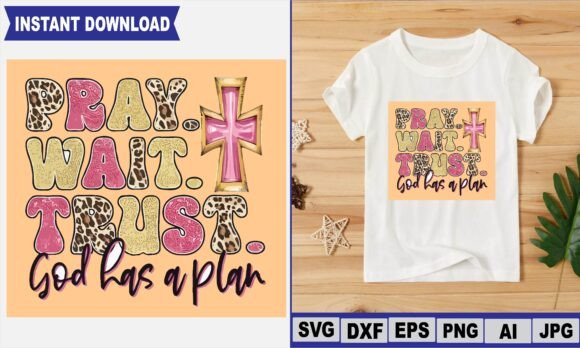
Pray, Wait, Trust – God Has a Plan Embroidery Design Review
As an embroidery designer who’s spent years working with clients and crafting handmade products for sale, I know how important it is to choose designs that not only look great but also perform well in real-world applications. The Pray, Wait, Trust – God Has a Plan graphic design caught my attention for its thoughtful composition and meaningful message. Let me walk you through what I see when evaluating this design from a practical standpoint.
A Balanced Blend of Faith and Aesthetic
The first thing that stands out about the Pray, Wait, Trust – God Has a Plan design is its emotional tone. It feels uplifting yet grounded—perfect for a wide range of embroidery projects where sentiment matters as much as style. The layout is clean and intentional, with typography that carries weight without overwhelming the eye. This is a design that communicates hope and patience subtly, making it ideal for both personal use and commercial ventures like custom apparel or boutique branding.
I especially appreciate the balance between text and any accompanying graphics (if present), which allows the design to remain readable even when scaled down. The font choices suggest a modern yet timeless feel, something that would work well on everything from soft cotton tees to more structured items like tote bags or aprons.
Where This Design Fits Best
This design naturally lends itself to several popular embroidery project types:
- Tote bag designs—The phrase “God Has a Plan” reads clearly and comfortably on larger surfaces, making it a strong candidate for reusable bags meant to carry both groceries and messages.
- Sweatshirt embroidery—With its bold yet elegant presence, it could serve as a central motif for a cozy, faith-inspired sweatshirt.
- Baby clothes—If adapted with softer fonts and colors, it could be a gentle reminder of trust and care for parents looking to personalize their child's nursery or wardrobe.
- Holiday gifts—A stitched version of this design on a pillow cover or tea towel could make a meaningful, handmade gift during Christmas, Easter, or Mother’s Day.
Its visual personality makes it suitable for both casual wear and home décor, which means it has cross-category appeal. That kind of flexibility is a big plus for Etsy sellers and small shop owners aiming to expand their product offerings with minimal inventory changes.
Real-World Stitching Performance
In practice, the success of this design will depend heavily on fabric type, hoop size, and thread color selection. Since the package includes multiple file formats like AI, DXF, EPS, SVG, JPEG, and PNG, there's room for customization, but it doesn’t eliminate the need for careful testing before production.
If you're considering using Pray, Wait, Trust – God Has a Plan on a tote bag, for example, start by stitching a test piece on scrap fabric. Pay close attention to stitch density, particularly if the design uses fill stitches or intricate details. High-density areas may require extra stabilizer to prevent puckering or distortion.
For sweatshirt embroidery, ensure that the design aligns well with the garment’s structure. If the phrase wraps around a curved surface like a cap or hat, the layout might need minor adjustments to maintain legibility and flow. The design’s shape and symmetry are forgiving, but always double-check your hooping technique.
Thread Color and Fabric Contrast
One thing I noticed while reviewing the digital preview: the design benefits from high contrast. When applying it to dark fabric, consider using white or light-colored threads for the background elements. On lighter fabrics, darker shades can help the message stand out. If you're an Etsy seller or running a craft business, offering variations in thread color can significantly boost buyer engagement and perceived value.
Also, keep in mind that the design likely includes a mix of satin stitch and running stitch techniques. These should be tested separately to ensure each element holds up after repeated washing—a key concern for anyone selling handmade products that are used daily.
When to Use Caution
While this design is versatile, there are some situations where it requires more attention than others:
- Small hoop sizes: The phrase is relatively long, so if you’re working with limited space, you’ll need to scale it down carefully. Tiny lettering can lose clarity unless the design is optimized for miniatures.
- Textured or stretchy fabrics: These materials can cause the stitches to distort. Always stabilize properly and avoid over-stitching in dense areas.
- Dark or patterned backgrounds: The design needs enough contrast to remain visible. Test it on black or printed fabric to ensure it still looks professional and clear.
- Products with frequent use: Think baby clothes or kitchen towels. Dense stitching or decorative accents may fray faster under heavy use. Opt for durable threads and reinforce high-stress zones.
Additionally, if the design includes detailed corners or fine lines, those sections may struggle on curved or layered surfaces. For example, placing it on an embroidered patch for a jacket could work beautifully, but you'll need to verify whether the curves hold up after cutting and heat pressing.
Visual Appeal and Brand Consistency
From a visual perspective, the machine embroidery design has a polished look that elevates any project it’s applied to. As a digital embroidery file, it adds instant professionalism to your design assets, especially when paired with quality mockups or included in a printable mockup set for digital product sellers.
For small shop merchandise, this design supports brand consistency by delivering a unified theme across different items. Whether it’s on a hoodie, apron, or personalized gift, the consistent message reinforces your brand identity and customer connection.
What I really like is how it fits into holiday embroidery and spiritual gift-giving. It’s subtle enough to avoid being too preachy but still carries a clear intentionality that resonates with buyers seeking heartfelt items.
Design Notes for Maximum Success
Here are some practical tips to get the best results when using Pray, Wait, Trust – God Has a Plan:
- Test on scrap fabric first to evaluate stitch behavior and adjust settings as needed.
- Review the stitch density in key areas—especially where words meet shapes or where fill stitches are used.
- Confirm the hoop size required for the full design. If you're unsure, check the files for any embedded notes or consult the creator.
- Inspect small details such as punctuation or inner spaces of letters. These can easily become lost if the design isn't properly scaled or stabilized.
- Use a black and white mockup to assess how the design will appear in grayscale, especially if you plan to offer monochrome versions.
- Compare how it looks on both light and dark fabric backgrounds to ensure it remains visually appealing across all options.
- Always use the appropriate stabilizer to support the fabric and maintain stitch integrity.
- Before selling finished products or digital embroidery files, confirm licensing terms to avoid legal issues later on.
These steps may seem basic, but they’re crucial for ensuring your final product looks just as good in person as it does on screen. Especially for commercial embroidery projects, taking the time to test and refine can save you from costly mistakes and unhappy customers.
Customer Reaction and Giftability
When it comes to customer perception, this design tends to resonate with people who appreciate faith-based messaging in a tasteful format. Its positive connotation makes it highly giftable—whether as a personalized gift or part of a curated collection for a nursery decor line or holiday gift box.
Buyers often look for embroidery that feels authentic and purposeful. The visual appeal of Pray, Wait, Trust – God Has a Plan meets that expectation. It's not just another trendy phrase—it’s one that many people genuinely connect with, which increases the chances of repeat sales and word-of-mouth referrals.
Final Thoughts for Designers and Sellers
Overall, Pray, Wait, Trust – God Has a Plan is a solid addition to any embroidery designer’s library. It offers a unique blend of motivation and elegance that works well in both personal and commercial contexts. However, as with any embroidery project, success depends on how well you adapt the design to your specific medium and audience.
For hobbyists and creative entrepreneurs, this design can add depth to your handmade shop or custom apparel line. For digital product sellers, including it in a themed pack of embroidery files can attract niche audiences looking for meaningful, ready-to-use content.
Remember, no matter how beautiful a design appears digitally, the true test is in the stitch. Take the time to evaluate how it behaves in your setup and tailor it accordingly. Your customers—and your reputation—will thank you for it.